


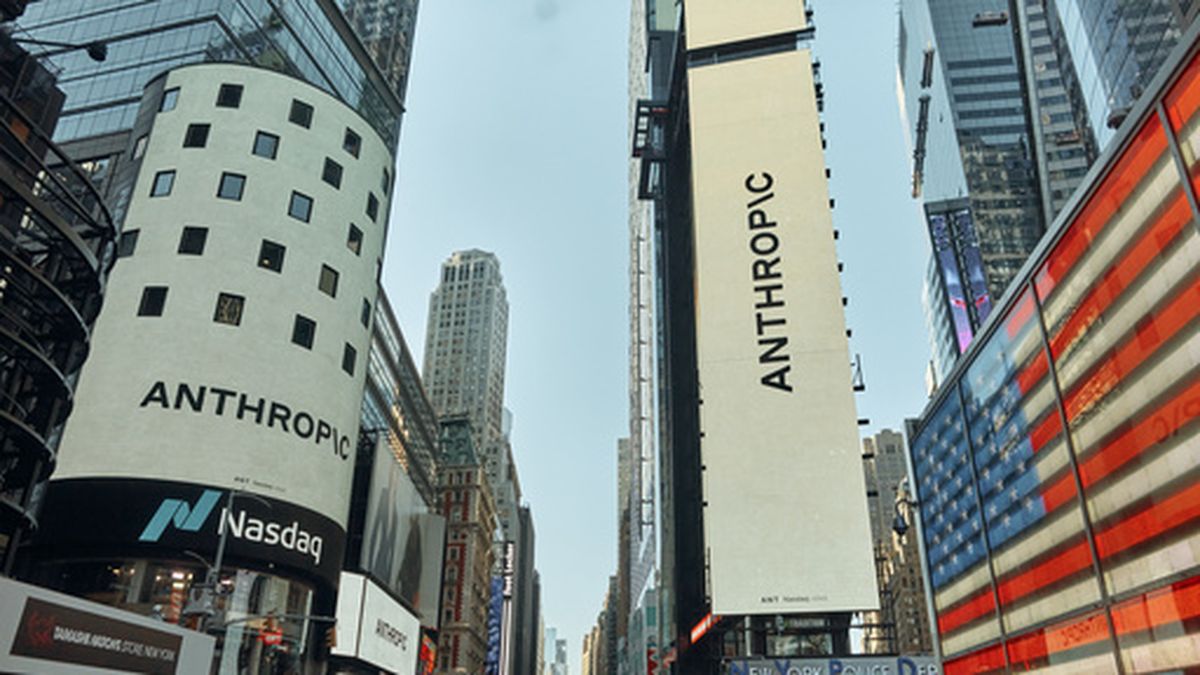
Key facts
- The artificial intelligence giant Anthropic opened for trading Thursday in the biggest public stock offering ever.1
- Anthropic plans to dedicate 5% of its shares for a new Anthropic Public Benefit Fund.2 Its seven co-founders say they’ll give away 80% of their equity — a $112 billion commitment based on its IPO price.2
- Many Anthropic employees cannot sell or gift the bulk of their shares until next spring.2 The sector’s volatility — between high borrowing costs, recent turmoil at the chipmaker Nvidia and warnings about risks to humanity , leaves skeptics doubtful about the amounts actually available to redistribute.2
The artificial intelligence giant Anthropic opened for trading Thursday in the biggest public stock offering ever, despite investor fears of a possible AI bubble and public anxiety that the technology threatens lives and livelihoods.1
The company priced its IPO at $83 per share, enough to value the entire business at $1.5 trillion, surpassing SpaceX as the largest IPO on record.1
Jared Kaplan, the San Francisco company’s chief science officer, and CEO Dario Amodei were doctoral students carpooling to an event organized by an academic fellowship.2
A commitment to philanthropy
Anthropic plans to dedicate 5% of its shares for a new Anthropic Public Benefit Fund..2 Its seven co-founders say they’ll give away 80% of their equity — a $112 billion commitment based on its IPO price.2
The napkin math suggests leading U.S. AI firms’ valuations could add at least $37 billion annually in intended philanthropy, according to a widely circulated May blog post by Nan Ransohoff, head of public goods at the payments company Stripe.2
Peter Singer, the moral philosopher whose writings influence many tech donors, said, “This is a once-in-a-lifetime kind of opportunity for people to really make an impact on extreme poverty.”2
Employees and skeptics
Many Anthropic employees cannot sell or gift the bulk of their shares until next spring..2 The sector’s volatility, between high borrowing costs, recent turmoil at the chipmaker Nvidia and warnings about risks to humanity , leaves skeptics doubtful about the amounts actually available to redistribute.2
Renaissance Philanthropy president Kumar Garg, whose nonprofit matches funders with scientific initiatives, said, “The challenge is that deploying philanthropic capital is hard.”2
Benjamin Soskis, a historian of philanthropy and senior research associate at the Urban Institute’s Center on Nonprofits and Philanthropy, said, “AI wealth, according to Soskis, carries a sense of ‘extreme peril’ and ‘really transformative promise’ that should spur even more urgent action from this emerging class of donors.”2
Titans such as oil magnate John D. Rockefeller Sr. and steel tycoon Andrew Carnegie established bureaucratic institutions intended to address the root causes of social problems.2
Those were followed by the turn-of-the-century technology wealth that brought a more data-centric, risk-taking approach.2
The Gates Foundation launched to address pressing crises in global health and poverty.2
Anthropic’s explosive growth is also fueling some anticipation that its 5,300 employees will want to rapidly scale their charitable impact, too.2 A generous internal giving program adds another incentive..2 Employee equity gifts are matched by the company with shares of Class N common stock.2
Anthropic also partners with donor-advised fund vendors such as Daffy, which offer a tax-efficient tool for grantmaking without the hassle of a more sophisticated charitable foundation.2
At least one of Anthropic’s co-founders will donate in the coming weeks to the Trump Accounts children’s savings program, according to comments made Friday by U.S. Treasury Secretary Scott Bessent on CNBC.2